

Top 10 Tips When Evaluating Qualified Technicians To Take The PAT in Warwick
Competence is the most important aspect to turn a mechanical procedure, Portable Appliance Testing (PAT), into a safe and legally-defendable safety regime. In accordance with UK law, specifically the Electricity at Work Regulations 1989 there is no mandatory licensing scheme or legally required certification for PAT testers. Regulation 16 stipulates that people are required to have "technical expertise or knowledge" in order to prevent harm and injury. The concept of "competence" puts the entire responsibility on the duty holder (employer) to choose and select technicians who demonstrate a combination of formal training, hands-on experience, and sound judgement. In the absence of compulsory certifications, there is many different levels of technical capability. Thus, it is important for duty holders to know how to rigorously assess the competency of technicians. A skilled technician does not just perform tests; they understand the basic principles of electrical safety, and can discern results with precision and make educated pass/fail choices based on the IET Code of Practice, and contribute important risk assessment information.
1. The Definition of Competence under EAWR, 1989 in Warwick
The lawful requirement is laid out in Regulation 16 of the Electricity at Work Regulations 1989 and requires that workers must be competent in avoiding danger and injury. HSE defines expertise as "the ability to perform the task in a safe and effectively without risk to oneself, or others." For PAT testing, it is a combination consisting of three components – a good understanding of electrical theory (theory) as well as sufficient knowledge (practical applications), and an adequate understanding of the system (specific appliances and environments they are working in). To be considered competent legally, they must possess all of these elements.
2. Formal qualifications and demonstrable competency in Warwick
Although there isn't any legally binding requirement for a particular certification, formal education provides the most obvious evidence of knowledge. City & Guilds qualification 2377 ("In-service inspection and testing of electrical equipment") is the industry standard. The mere fact that you have this certificate does not guarantee the ability. It is necessary to have practical experience. A dutyholder should look for the appropriate certification and proof of experience. The technician must have extensive experience to prove their skills.
3. The City & Guilds 2377 Qualification Defined
City and Guilds' 2377 qualification is a Level 3 qualification which assesses the knowledge of a candidate about the IET Code of Practice, and their ability of performing inspections and testing properly. The City and Guilds 2377 certification is offered in two different parts. 237777 (theory based multiple-choice test) and 237778 (practical assessment). The entire award proves that both the technician's knowledge as well as his skills in the field have been assessed independently. If you are attempting to verify this certification it is advisable to ask for the certificate number and to check its validity on the City & Guilds online verification portal, as certificates can be counterfeited.
4. Practical hands On Experience is Essential in Warwick
It is not worth much without the ability to apply it. A technician who has extensive experience must be able to test a wide range of appliances and work in a variety of settings. Their experience enables them to detect subtle issues that novices might overlook, handle unusual equipment safely and effectively in complex settings such as industrial sites or construction sites. The employee should inquire about the years of experience the technician has and the type of sites that they work in to determine the validity of their experience.
5. Understanding the IET Code of Practice is essential for in-service inspection and testing
The IET Code of Practice (Code of Practice) is the bible of all PAT testing. Technicians who are certified to not just have a code of practice, but also understand its contents thoroughly. It is important to understand the various equipment classes as well as the sequence of checks and tests, how to use test instruments correctly, and the results that are acceptable or not. This is an important measure of competence and professionalism.
6. Equipment Calibration and Understanding of Testing Instruments
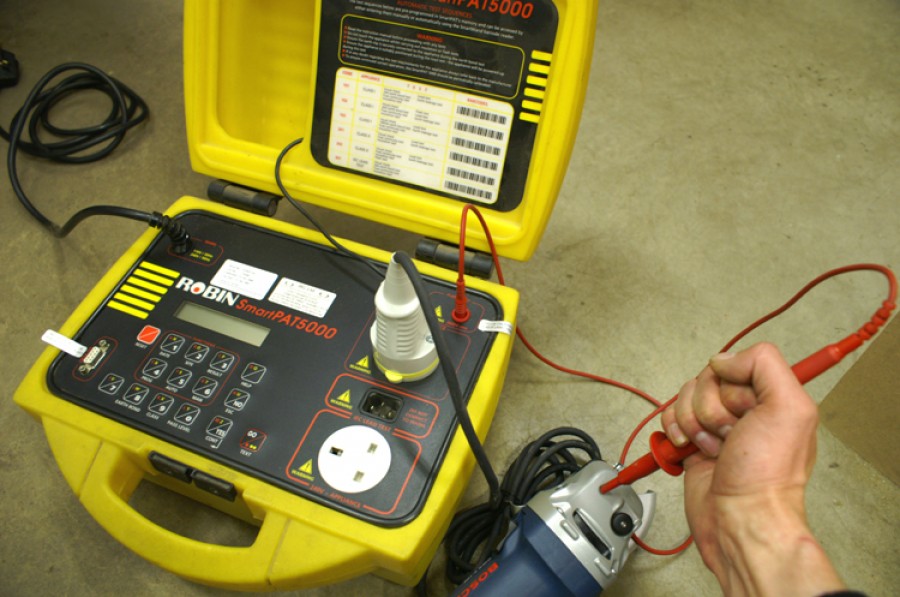
A competent technician understands that their own test equipment is fundamental in achieving precise results. A UKAS accredited lab has to periodically calibrate the PAT tester (typically once per year) to ensure its precision. They must be able to show the validity of their certification for the device. Additionally, they must be able to use the device, perform daily user checks (e.g. test for lead), and interpret any results that it gives instead of just logging numbers.
7. The ability to conduct effective visual inspections in Warwick
The majority of the faults can be identified by an in-depth visual inspection. This is a procedure a technician with high qualifications is very careful about. He'll inspect all cables and plugs, connectors and casings to look for wear, damage or indications of heat excessive. The technician is aware of how to connect a plug and has the correct fuse rating. It is possible that a tester with less experience may rush through or even skip this step completely.
8. The Interpretation of Results as well as the Application of Pass/Fail Criteria in Warwick
The electronic tester provides readings, while the technician makes the judgement. Ability to interpret the readings in relation to the IET Code of Practice, the appliance and its pass/fail limit is a sign of competence. For instance they should be aware of the point at which a slightly higher insulation resistance reading can be accepted or when the earth continuity reading is acceptable, but may be indicating the presence of a problem with an appliance of a particular type. The most valuable thing about a professional is his or her ability to make informed choices.
9. The importance of insurance and liability in Warwick
While it is not a requirement of the law, any competent technician should hold Public Liability Insurance. The customer is protected in the event that the technician damages property during the test. Enlisting a technically competent technician can strengthen the duty holder's legal defense. It demonstrates that all reasonable steps were taken to ensure a suitable candidate.
10. Communication and documentation skills in Warwick
A testing process that lacks clear and accurate documents is not worth the effort. A qualified technician must create detailed, legible asset reports and registers that accurately define the appliance, record test results and clearly indicate a pass/fail. They must also be able to effectively communicate with the person in charge informing them of any issues they spot, the risks associated with it, and the steps required (e.g. replacement or repair, etc.). This communication plays a crucial role in the overall safety procedure. View the recommended electrical equipment testing in Warwick for website tips.
Ten Tips On The Best Places To Service Fire Extinguishers in Warwick
The Warwick of your service provider and the degree of its coverage for services have significant influence on the reliability, quality and price of the safety service you get. In the UK where compliance with the Regulatory Reform Order 2005 (Fire Safety) requires continuous and prompt maintenance, the service provider's physical and logistical capabilities directly influence on the way they can fulfill their contractual obligations and legal obligations. Be aware of the time to respond along with travel costs, cultural understanding, and regional compliance nuances when choosing between a multinational company as well as a local expert with regional expertise. A provider's operational footprint–their depot Warwicks, engineer distribution, and territory management–determines whether they can offer genuine rapid response or merely theoretical coverage, making this a critical factor in ensuring your premises remain protected and compliant without suffering from excessive downtime or hidden charges related to geographic constraints.
1. National vs. Local Provider Operating Models
The UK market is a mix of multinational companies, with their extensive networks, and smaller, locally-based specialists. National companies often have regional depots via the network of distributed engineers. They can provide the same brand name and resources for large multi-site contracts. They can be scaled and have often robust backup systems. Local providers have a deep understanding of a particular area (e.g., the Southeast, Scotland), perhaps more personal service, and very quick responses within their main area of operation. The trick is to figure out whether the "national" provider truly has strength within your particular region or if your postcode is merely on the periphery of their service, which could lead to slower response times and higher cost for mileage.
2. Engineer Density and Proximity Your Postcode
The proximity of a permanent engineer and fully equipped is vital for a successful service. The provider can claim to be able to cover the UK but it's ineffective if the nearest engineer is two hours away. It is essential to ask the provider: "Where's your nearest engineer located close to the postal code we have?" and "How many engineers are in my area?" The amount of engineers working in a particular region could cut down travel time for scheduled visits as well as emergency responses and the possibility of cancellations as a result of unexpected delays.
3. Call out and distance charges Policy in Warwick
The Warwick directly impacts the cost of travel via mileage policies. Transparent providers will detail their policies in the quote. Some include a set amount of "free miles" from the engineer base or local depot. Over this threshold a fee per mile is charged. These charges can be significant in remote and rural areas. This is the reason it's crucial to obtain a written estimate that is based on the precise Warwick of your company. Some local service providers don't charge for mileage within the county's core. This is a substantial cost saving for businesses in that area.
4. Regional Compliance Nuances and Regulations
There are a few differences in the laws that govern the safety of firefighters in Great Britain. The Regulatory Reform (Fire Safety) Order 2005 is in force in England and Wales. Scotland is subject to the Fire (Scotland) Act and the regulations that go with it. There may be slight differences in documents and enforcement. Northern Ireland has separate legislation. Office staff and engineers will be taught about the regional specifics by a company with genuine coverage. This ensures that the documentation you use and service procedures are in line with the requirements of local enforcement authorities.
5. Multi-Site Contract Management, National Account Coordination in Warwick
Businesses with multiple sites in the UK including retailers, property management companies, franchises or other businesses, need a provider who can provide seamless national coordination. A centralised account manager working in conjunction with the regional engineers is required to ensure this happens. The provider must demonstrate a sophisticated scheduling and communications platform that provides consistent service delivery, standardised pricing and reporting unified via a single point contact–regardless of whether your sites are located in London, Manchester, or Glasgow. The administrative nightmare that comes with managing multiple local contracts is removed.
6. Warehouse and Storage Infrastructure in Warwick
Physical infrastructure is an indicator of service quality. Depots are not only administrative offices. They are also essential logistic hubs, storing replacement extinguishers and parts. If an engineer is near a warehouse that is stocked, they can restock quickly and address a variety of issues in a single visit. Engineers may not have all the items they require if a provider is covering your region, but their closest warehouse might be a long distance away. This can lead to delays and multiple visits for simple jobs.
7. Contingency Planning and Engineer Redundancy in Warwick
A solid coverage depends on contingency plans in case of sickness, annual leave or unexpected demand. The provider that provides a limited coverage in your area could have only one engineer responsible for a vast geographic area. If the person who is accountable for your scheduled service isn't available, it may result in delays or the completion of the service due to an engineer traveling across a large distance, that could affect the quality of service. If a service provider has multiple engineers operating in the same Warwick has built-in redundancy. This will help you to avoid compliance gaps due their internal resourcing.
8. Urban vs. Rural Service Challenges
The requirements for servicing vary significantly between rural and urban areas. The process of servicing offices in Central London can be costly and difficult because of congestion charges in London, ULEZ compliance and the lack of parking. Rural areas pose challenges, including longer travel time, remote access and potentially poor mobile signal. Companies that have worked in the specific Warwick in which you reside will have protocols and pricing specifically designed to address the challenges.
9. Verification of Claims for Coverage through Client References in Warwick
Examine the coverage claimed by the provider. The best results by asking local references from clients. Talking to similar local businesses can provide a realistic picture of the service provided by the company: Was it timely? Was the engineer from your area? Was there a surprise mileage charge? This due diligence will provide real-world evidence that supports (or contrary to) the provider’s claimed abilities in your region.
10. Contractual guarantees based upon geographic performance in Warwick
Additionally, the coverage promises must be secured by promises made in contracts. The Service Level Agreement (SLA) should include geographic performance metrics. It could, for instance, guarantee that a scheduled service will be performed by an engineer based within a specified radius or that a call-out in an emergency will be responded to from a designated local depot within a specified time. Incorporating these KPIs in the contract will formalise provider assurances, and also provide recourse for if they don't meet their commitments. Take a look at the top Warwick fire extinguisher maintenance for site examples.
